Some films begin as ideas. Others begin as experiences that remain buried within us until they find their way onto the screen.
Parampad emerged from one of the most difficult periods of my life—the passing of my father.
I have always considered myself a strong person, capable of facing difficult situations and moving forward. But losing my father affected me in a way for which I was not prepared. His death broke something within me. I struggled to accept the loss, lost my direction and gradually began slipping away from the life I had known.
During that difficult period, three people stood firmly beside me: my mother, my wife and my daughter. Their strength, patience and love helped me rediscover my own strength. With time, I stopped drinking, returned to work and began rebuilding my life.
The realization did not come suddenly. It developed slowly: grief may remain with us, but life does not stop. We have to keep moving, keep working and keep living—not because the person we lost no longer matters, but because their love remains part of the life we must continue.
That personal realization became the emotional foundation of Parampad.
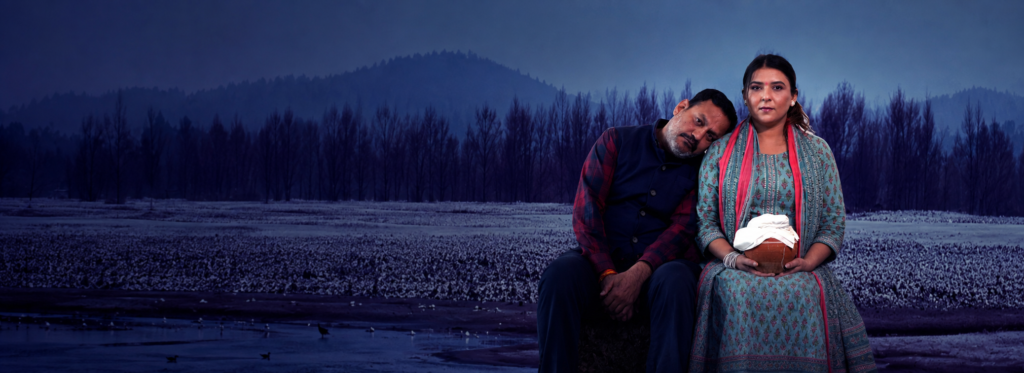
The central character of Parampad is an artist who works as a manager at an art gallery. He and his wife have created a comfortable life together. They live alone and have no children, so their world revolves largely around one another.
When his wife dies, the life they built together suddenly loses its meaning.
He has achieved professional and financial security, but none of it can protect him from grief. The money he earned for their future now feels purposeless because the person with whom he wished to share that future is gone.
Unable to accept her death, he keeps her ashes with him. He refuses to immerse them in the River Ganga because, in his mind, doing so would mean accepting that she has truly left him.
He is not ready to release her—and he is equally unprepared to release himself from his pain.
The story unfolds during the thirteen-day mourning period observed in many Hindu families after a death.
Within the emotional world of the film, the grieving husband believes that his wife’s soul is still present in their home. He continues speaking with her as he attempts to hold on to the life they shared.
To him, she remains close. He talks to her, remembers her and behaves as though refusing to perform the final rites might prevent their separation from becoming permanent.
But his wife wants something different for him.
She understands that her own life has ended, while his has not. She wants him to release her soul, immerse her ashes and allow himself to return to the world of the living.
Their conversations become the emotional heart of the film. They are not simply conversations between a husband and wife; they represent the conflict that takes place inside anyone who has experienced a profound loss.
One part of us understands that the person is gone. Another continues searching for their presence—in familiar rooms, remembered conversations and the smallest details of everyday life.
The husband believes that keeping his wife’s ashes close preserves their bond. In reality, his inability to let go has imprisoned them both.
His wife’s presence reminds him that love does not demand that the living stop living. Holding on to suffering is not the same as holding on to love.
This understanding is also connected to my own journey.
After losing my father, I had to recognize that destroying myself would not honour his memory. My family helped me understand that continuing to live did not mean leaving him behind.
The people we lose remain part of us—in our values, memories, choices and the way we live. Moving forward does not erase them. Sometimes, choosing to live is the most meaningful way of carrying their love with us.
Eventually, the protagonist understands what his wife has been trying to tell him.
He takes her ashes to Haridwar and immerses them in the River Ganga. The journey is both physical and emotional. By performing the final rite, he accepts that her earthly journey has ended.
At the same time, he releases himself from the belief that his own life must end with hers.
The immersion does not remove his love or erase his grief. Instead, it allows that love to take a different form—one that can exist alongside acceptance.
As the ashes enter the river and move beyond his reach, he finally permits life to carry him forward.
This becomes the beginning of a new chapter.
Parampad is not a film about forgetting someone who has died. It is about understanding that letting go is not a betrayal.
Grief has no fixed timetable. Every person experiences loss differently, and healing cannot be forced. Yet there may come a moment when we must decide whether pain will become the end of our story or a part of the journey through which we learn to live again.
For the protagonist, that moment comes at the River Ganga.
For me, it came through the strength of my mother, wife and daughter, the decision to leave drinking behind, and the courage to return to my work.
Cinema gave me a way to transform that deeply personal experience into a story that others might recognize within themselves.
Many people have faced a loss that changed everything. Some have found their way forward through family. Others have found it through faith, work, art or time. Parampad speaks to that universal human experience.
It carries a simple message: life continues to flow. We may carry grief with us, but we must allow ourselves to move with that flow.
The people we love would not want us to remain imprisoned by their absence. They would want us to remember them, honour them and continue living.
That is the emotional truth at the heart of Parampad.
Parampad is a feature film from Rohini Films, inspired by filmmaker Raman Rishi Dwivedi’s personal experience of loss, recovery and rediscovering the courage to move forward.