Sometimes, without realising it, we return to the place where our journey first began.
My journey as a filmmaker started with documentary filmmaking. Before feature films, commercial productions and the many creative directions that followed, documentaries taught me how to observe the world through a camera. They taught me to wait, to listen and to recognise the stories hidden inside ordinary lives.
Today, after travelling through different forms of cinema, I find myself returning to documentaries. In many ways, the journey has come full circle.
Where the Journey Began
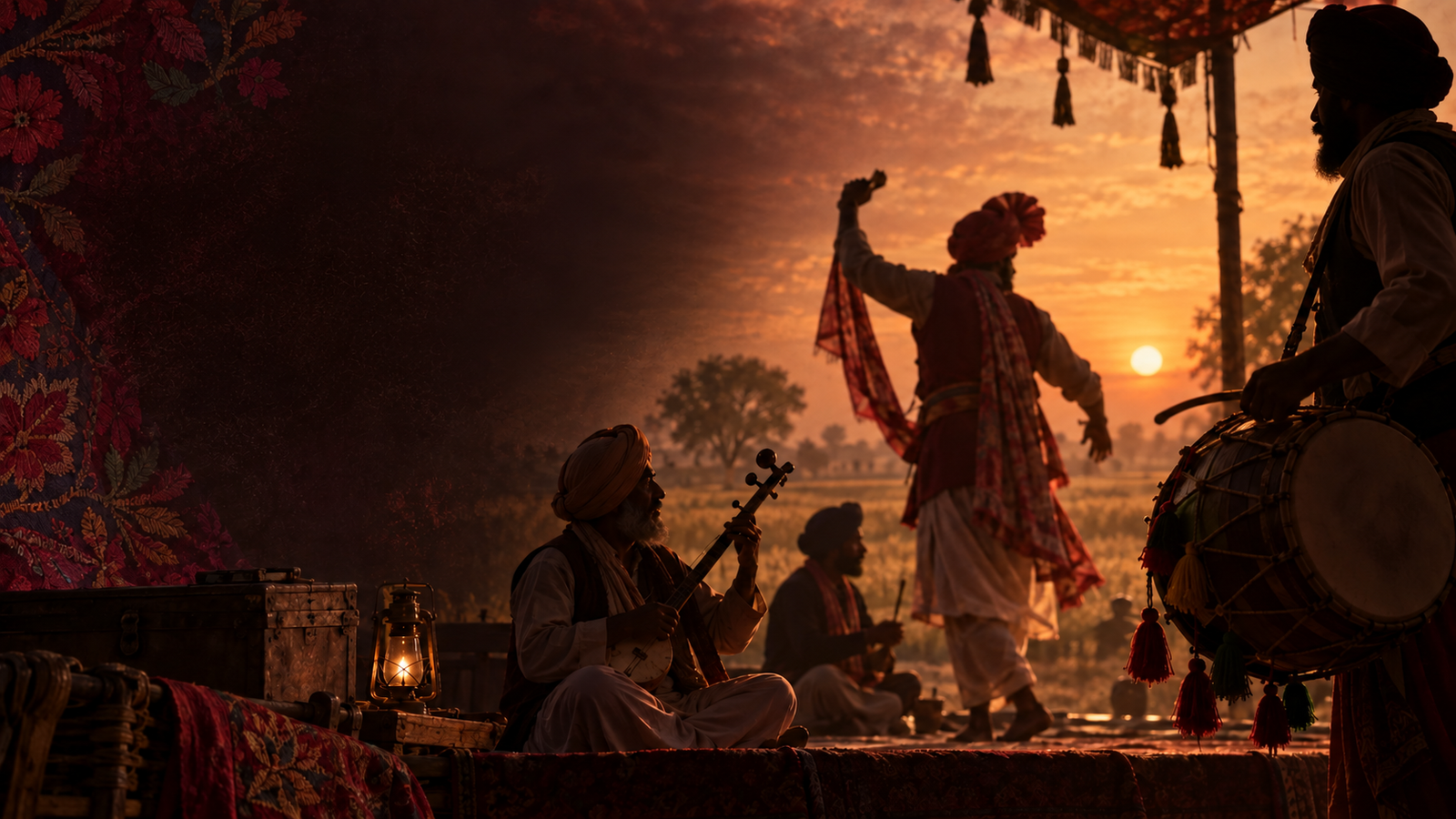
One of the documentaries from the early phase of my filmmaking journey was Vanishing Folk Arts of Punjab, made for CCRT.
The film was created at a time when several traditional art forms were already struggling to survive. These traditions were not merely forms of entertainment. They carried the memories, beliefs, skills and collective identity of generations.
Documenting them was therefore about more than recording performances. It was an attempt to preserve a cultural memory before it quietly disappeared.
Working on the documentary allowed me to meet artists whose knowledge had been passed down through families and communities. Their art was shaped by years of practice, yet many were facing an uncertain future as audiences, lifestyles and cultural priorities changed.
The camera became a witness to their dedication and their concern for what might be lost.
Documentary Filmmaking Taught Me to Observe
A documentary filmmaker cannot always control what happens in front of the camera. Real life does not follow a written shooting schedule. People do not always speak in perfectly constructed sentences, and meaningful moments often arrive without warning.
That unpredictability is also what makes documentary filmmaking so powerful.
While working on Vanishing Folk Arts of Punjab, I learned that the filmmaker’s responsibility is not simply to collect footage. It is to understand the people being filmed and represent their lives with dignity.
The most revealing moments are often the quiet ones: an artist preparing for a performance, an ageing practitioner speaking about the future, or a gesture that communicates more than a long interview.
Documentary filmmaking taught me patience. It taught me that observation can be as important as direction and that reality often carries an emotional power no screenplay can reproduce.
Moving Through Different Forms of Cinema
Over the years, my filmmaking journey expanded into feature films, editing, colour grading, commercials, music videos and other forms of visual storytelling.
Each experience added something new to my understanding of cinema. Feature films strengthened my relationship with performance and narrative. Editing taught me rhythm and emotional structure. Colour grading deepened my understanding of atmosphere and visual tone.
Although the formats changed, the lessons I learned from documentary filmmaking never disappeared. The instinct to observe people carefully, search for honesty and allow meaningful moments to unfold naturally remained present in all my work.
The documentary filmmaker was always there.
Returning to Real Stories
In recent years, I have once again begun turning my camera towards real people, places, rituals and cultural experiences.
This return was not part of a calculated plan. It happened gradually. I began noticing stories around me—the changing character of a city after rainfall, life beyond expanding urban landscapes, a family ritual in a Himalayan village and the history held within familiar monuments.
These subjects reminded me why I had first been drawn to documentary filmmaking.
There is something deeply rewarding about recording life as it exists. A documentary can preserve a place, a tradition or a human moment that may never appear in exactly the same way again.
Today’s technology makes filmmaking more accessible, but the heart of documentary storytelling remains unchanged. It still requires curiosity, respect, patience and the willingness to look beyond the obvious.
Watching the Past With New Eyes
Returning to Vanishing Folk Arts of Punjab after many years is an emotional experience.
I can now see the film not only as a documentary about traditional artists but also as a record of my own development as a filmmaker. It represents an earlier stage of my creative life—a time when I was learning how to approach people, understand their stories and translate reality into images.
Some technical choices might be different if I made the film today. Technology, cameras and my own experience have all evolved. However, the intention behind the documentary remains as important to me now as it was then.
It was made with a desire to preserve something meaningful.
That desire continues to guide my work today.
Why Cultural Documentation Still Matters
Traditional arts survive when they are practised, supported and passed on. Filming them cannot replace that living process, but a documentary can ensure that the artists, their work and their concerns are not forgotten.
Cinema can carry cultural memory across generations and geographical boundaries. Someone who has never witnessed a particular tradition in person may encounter it for the first time through a film.
For this reason, cultural documentaries are not simply records of the past. They can encourage curiosity, recognition and renewed interest in traditions that might otherwise remain unseen.
The responsibility belongs not only to filmmakers. Audiences, cultural institutions and communities all have a role in keeping these traditions visible.
A Journey Coming Full Circle
Looking back, it feels meaningful that my filmmaking journey began with documentaries and has now returned to them.
The years between have given me greater technical knowledge, wider experience and a deeper understanding of storytelling. But documentary filmmaking continues to bring me back to the essential purpose of the camera: to observe, preserve and share something worth remembering.
Vanishing Folk Arts of Punjab represents both a beginning and a continuing responsibility.
As I move forward, I hope to document more people, places and traditions—not simply as subjects, but as living stories connected to our shared cultural memory.
The journey has come full circle, but it has not ended. In many ways, it feels as though a new chapter is beginning.
Watch the Documentary
Vanishing Folk Arts of Punjab offers a glimpse into traditional cultural expressions and the people working to keep them alive.
If the documentary connects with you, please watch it, share it and help these cultural stories reach a wider audience.