
Some films are made with money and planning. This one was made with grief, faith, and a promise I didn’t know I was keeping until I was already halfway through it.
Where It Began
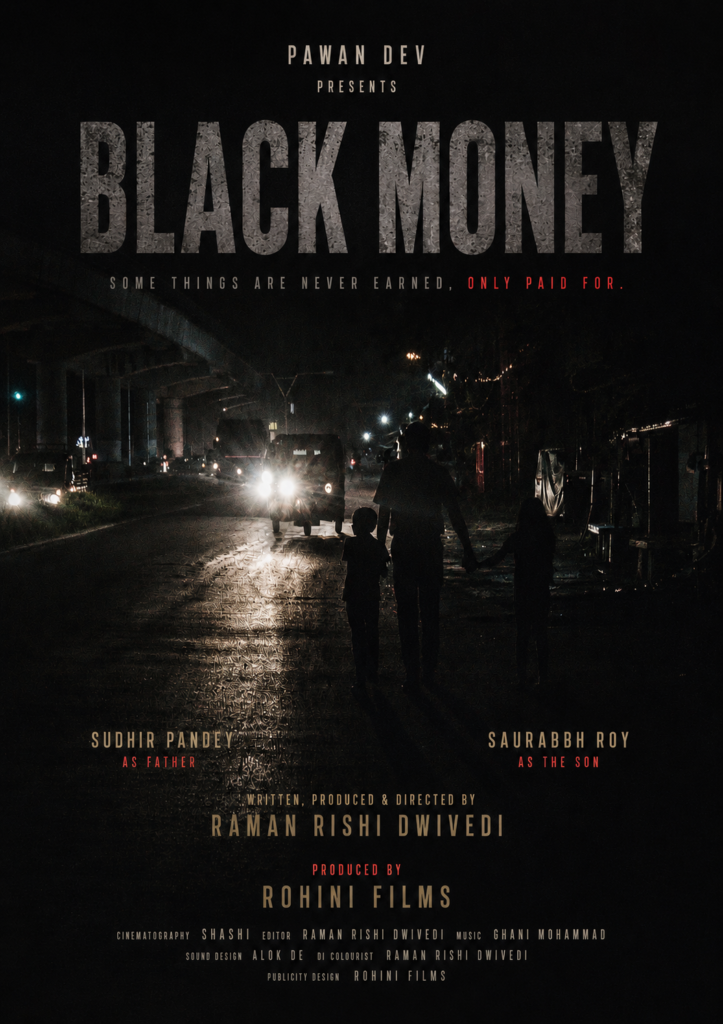
“Black Money” was never just another project for me. It was my father’s dream before it was mine — a film he wanted to make, one that was meant to mark my beginning as a filmmaker in this industry. Then he passed away before we could make it together, and I was left holding a dream that wasn’t fully mine yet, unsure whether I had the right — or the strength — to finish it alone.
When Everything Fell Apart
Grief has a way of exposing everything else that’s fragile around you. Not long after my father’s passing, my lead actress backed out without warning, leaving me without my heroine and without any real plan for what came next. I remember feeling completely lost — not just about the film, but about whether I belonged in this industry at all.
I made the difficult calls to the senior artists attached to the project, bracing myself for the same coldness the industry is so often accused of. What I got instead humbled me completely. Their warmth, their patience, and their willingness to stand by a grieving first-time director taught me something I hadn’t expected to learn from a film shoot: that cinema isn’t built on money or contracts nearly as much as it’s built on relationships. Those relationships were what carried “Black Money” forward when I had nothing else to carry it with.
What the Film Taught Me
Somewhere in that chaos, I understood something about my father I hadn’t fully appreciated while he was alive — the kind of respect he’d earned in an industry that rarely gives it freely. People who owed him nothing showed up for his son anyway, out of what he’d meant to them. That is not something you can plan for in a production budget.
Filmmaking is often described as the closest thing to playing god — building a world, deciding who lives, who dies, who speaks and when. But making this film taught me the opposite. On set, all your careful planning gives way to the moment itself. You stop being the author of the story and become something closer to a vessel carrying it through. I’ve never felt more like a small part of something larger than I did during the making of this film.
Finishing What He Started
“Black Money” wasn’t finished quickly, and it wasn’t finished easily. But it was finished — with the same technicians and artists who chose to stay through the hardest parts of it, some out of professionalism, some out of something closer to loyalty to a man who was no longer there to ask for it.
Looking back now, years later, I think that’s the real story of this film: not the plot or the production, but the people who helped a grieving son keep a promise to his father, one difficult day at a time.
— Raman Rishi Dwivedi, Rohini Films